Banff National Park is Canada's oldest, established in 1885 following the discovery of hot springs near the present-day townsite. It covers 6,641 square kilometres of the Alberta Rockies, sits roughly 130 kilometres west of Calgary on the Trans-Canada Highway, and draws more visitors than any other national park in the country. In summer, particularly July, that concentration of visitors creates practical constraints that shape how the park is best visited.
This guide focuses on the summer window — June through September — and the 232-kilometre Icefields Parkway (Highway 93) north to Jasper National Park.
Entry fees and Discovery Pass
A valid Parks Canada pass is required to enter Banff. Day passes can be purchased at park gates or via the Parks Canada app. The annual Discovery Pass covers entry to all national parks and historic sites in Canada and is available through parks.canada.ca. Rates change annually; consult the Parks Canada website for current pricing.
The discovery pass is cost-effective for trips of three or more days, or for anyone visiting multiple national parks in the same year.
Campground reservations
Banff has over 2,000 campsite spots across several campgrounds. The Parks Canada reservation system (reservation.pc.gc.ca) opens in April for the upcoming summer season, and popular sites at Tunnel Mountain Village and Two Jack Lakeside fill within hours. Reservations are strongly recommended for July and August visits.
Overflow camping and walk-in sites are available but limited. The Banff townsite has hotels at a range of price points, and Canmore — 25 kilometres east — is often used as a base for the park.
Moraine Lake
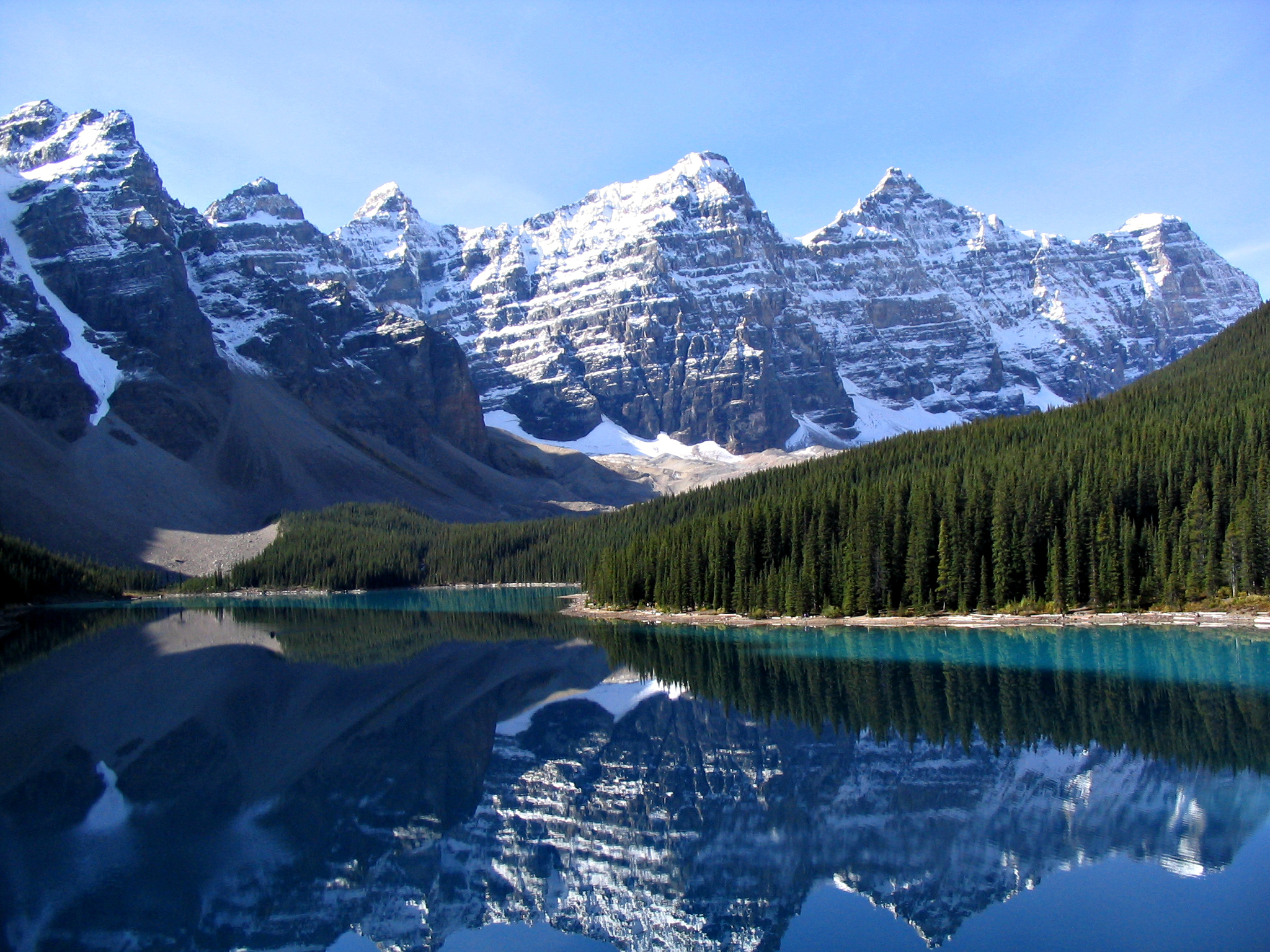
Moraine Lake, in the Valley of the Ten Peaks, is one of the most photographed locations in Canada. The access road (Moraine Lake Road, off Lake Louise Drive) typically opens in late May or early June depending on snow conditions. In summer, the road is often closed to private vehicles due to congestion; Parks Canada operates shuttle buses from the Banff townsite and Lake Louise ski area.
The shuttle system and its booking requirements change from year to year. Current access rules are posted on the Parks Canada Banff page before each season. Arriving by shuttle in early morning gives the best light on the lake and avoids peak crowds, which typically arrive between 10:00 and 14:00.
Moraine Lake — key notes
- Road opens approximately late May, subject to snowpack
- Private vehicle access restricted in summer; shuttle required on restricted days
- Shuttles depart from Banff townsite and Lake Louise Village — book through Parks Canada app or website
- The Rockpile trail (short, 30 min return) provides the elevated viewpoint used in most photographs
Lake Louise
Lake Louise sits at 1,731 metres elevation. The turquoise colour is produced by rock flour suspended in glacial meltwater — fine particles ground from rock by the Victoria Glacier above. The Fairmont Chateau Lake Louise sits at the lakefront; non-guests may walk the lakeshore freely. The Plain of Six Glaciers trail (10 kilometres return, 365 metres elevation gain) runs along the north shore to a teahouse open seasonally.
The Lake Louise village, about 4 kilometres from the lake, has a small commercial centre, Parks Canada visitor centre, and campground. Parking at the lake itself is paid and very limited; shuttles from the village run throughout the day in summer.
The Icefields Parkway
Highway 93 North runs from Lake Louise to Jasper — 232 kilometres through continuous mountain terrain. It crosses the continental divide at Bow Summit (2,069 metres) and passes the Columbia Icefield, the largest accumulation of ice south of the Arctic Circle in North America. The drive is possible in four hours but rewards slower travel. There are multiple pullouts for glacier views, wildlife watching, and short hikes.
The Athabasca Glacier, visible from the Icefields Centre (administered by Parks Canada), can be walked to on foot via a maintained path. Guided Ice Explorer tours on the glacier surface are commercially operated and bookable through Pursuit, the park concessionaire. The ice surface has retreated significantly over the past century; interpretive markers along the access road show the glacier's former extent at various points in the twentieth century.
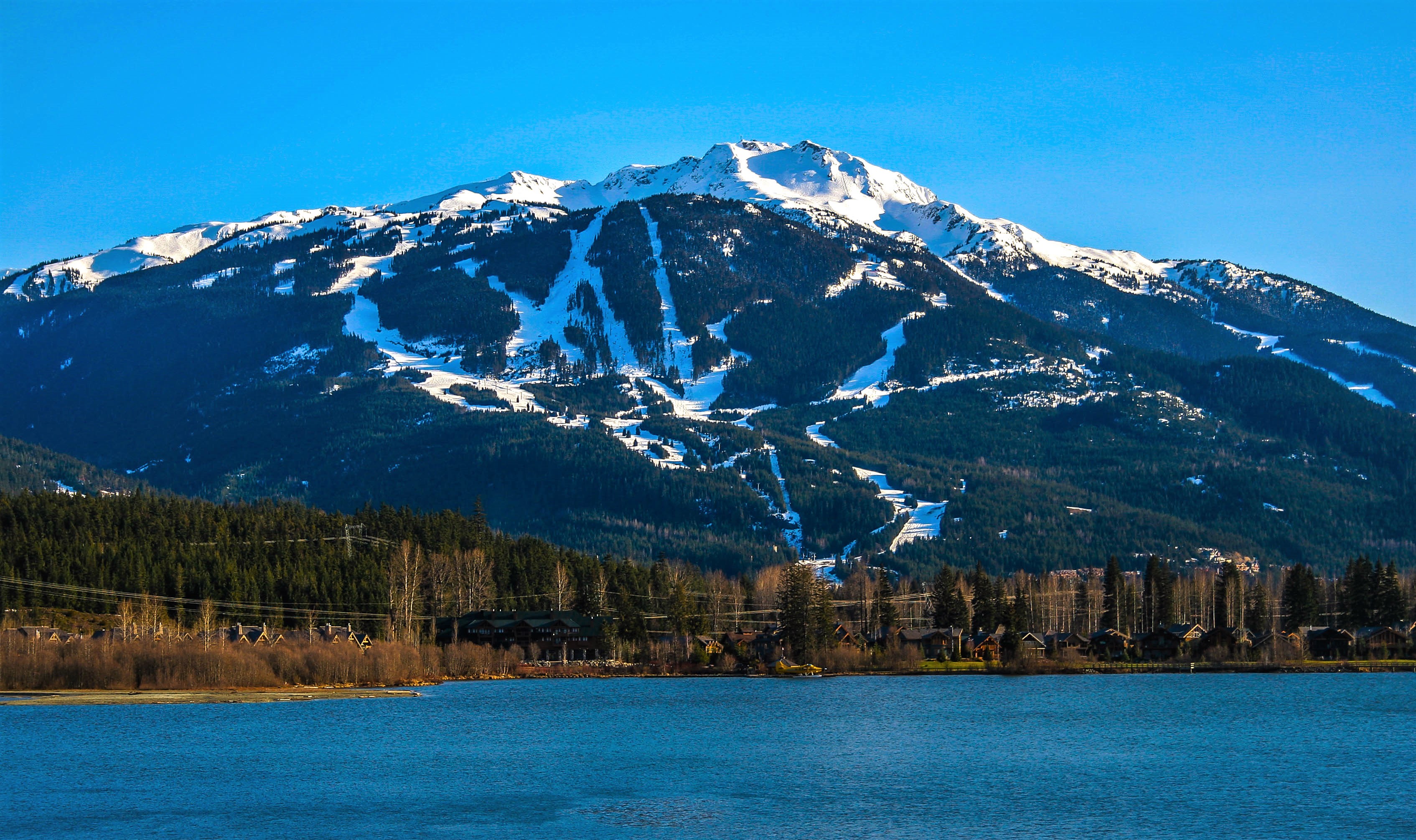
Rocky Mountain terrain in summer. Photo: Murray Foubister / Wikimedia Commons, CC BY-SA 2.0.
Wildlife on the parkway
Black bears and grizzly bears are present throughout the Banff and Jasper corridor. Vehicle pullouts form when bears are spotted near the road — Parks Canada wardens manage these but traffic can back up considerably. Bears are most commonly seen in the early morning and evening hours.
Elk are common near the Banff townsite and are habituated to people; Parks Canada advises maintaining at least 30 metres distance. Mountain goats and bighorn sheep are frequently seen on rocky slopes throughout the parkway. Wildlife jams are normal in July and August; allow extra time for the Icefields Parkway drive.
Jasper National Park
Jasper is quieter than Banff in terms of commercial development, though still busy in summer. Jasper Dark Sky Preserve is one of the largest in the world; stargazing conditions are best away from town, on clear nights between August and October. Maligne Lake, 48 kilometres from the townsite, is reached by a scenic road and has guided boat tours to Spirit Island — reservations through Pursuit are required in summer.
Icefields Parkway — practical notes
- Road is typically open year-round but can close briefly for avalanche control in winter
- No fuel between Lake Louise and the Columbia Icefield (approximately 130 km); fill up in Lake Louise or Banff
- Cell service is intermittent; download offline maps before departure
- Speed limit 90 km/h; watch for wildlife crossings
When to visit
June offers the least crowded conditions of the summer season, with most facilities open after May 15 or so. The downside is that higher elevation trails and Moraine Lake Road may still be closed in early June. July is peak season — crowds, queues, and accommodation strain. Late August and September see diminishing crowds, cooling temperatures, and the first autumn colour on the larches around Larch Valley (accessible from Moraine Lake).